Heating safety
Furnace repair & heating diagnosis in McDonough
Heating diagnosis focused on safe operation, ignition, controls, airflow and the full furnace operating sequence. Two 20-mile service circles centered on McDonough and Atlanta. Mon–Fri 8am–5pm; Sat–Sun 9am–3pm; call (404) 849-1938. We test the connected system, show you the evidence and explain the next step before approved work begins.
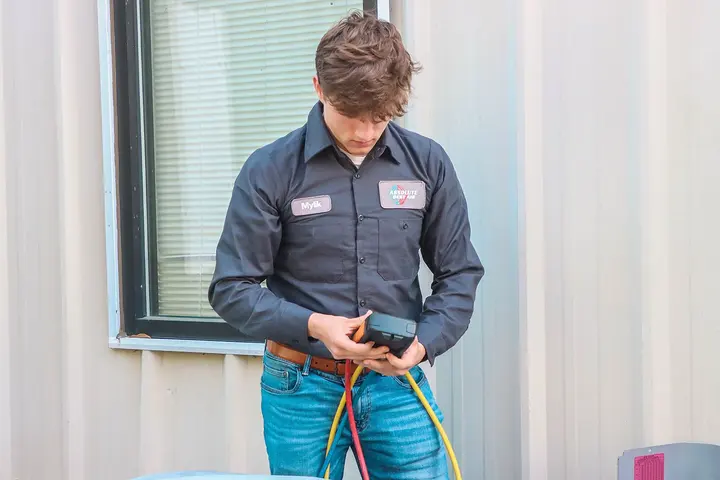
Absolute Best Air diagnoses furnace ignition, control, airflow, electrical and operating-sequence problems throughout two 20-mile service circles centered on McDonough and Atlanta.
When to call
Heating symptoms that can involve safety controls
Ignition, flame proving, overheating and airflow problems can look similar from the thermostat. Gas odor or a carbon-monoxide alarm requires emergency action, not an ordinary booking.
- The furnace will not start
- The burners start but shut off quickly
- The blower runs without warm air
- A new burning, gas or electrical odor
- The furnace cycles frequently
- A carbon-monoxide alarm or safety concern
Safety-aware triage
Gas and carbon-monoxide concerns are treated as emergencies.
Full ignition sequence
Controls are tested in the order required for safe heat.
Post-repair retest
The repaired furnace completes an appropriate operating cycle.
Furnace operating sequence
Test every required step from call for heat through safe shutdown.
We evaluate the furnace as a sequence of controls and safety checks, then explain exactly where normal operation stopped.
Thermostat and control testing
Ignition-sequence diagnosis
Electrical and safety-control checks
Filter and airflow evaluation
Blower and temperature-rise review
Post-repair operating-cycle verification
Diagnostic intelligence
Sequence-based testing exposes intermittent furnace problems.
Documented electrical, airflow and control findings help separate a one-time symptom from a repeatable failure and create a clearer record of the repair.
What to expect
Safety first. Findings second. Repair only after approval.
The response changes immediately when odors, alarms or unsafe operation are reported.
- 01
Make safe
We begin with reported odors, alarms, electrical events and other conditions that change the safety response.
- 02
Follow sequence
The technician evaluates the furnace as it calls, proves, ignites, heats, moves air and shuts down.
- 03
Present findings
Measured results and repair options are explained before approved work begins.
- 04
Retest
The completed repair is followed by an operating and safety-control check appropriate to the equipment.
Furnace repair FAQs
Furnace answers that put safety ahead of convenience.
If there is a gas odor or carbon-monoxide alarm, leave the property and contact the appropriate emergency authority first.
What should I do if I smell gas near my furnace?
Leave the building, avoid switches or ignition sources, and call the gas utility or emergency services from a safe location. Do not re-enter until the property has been declared safe.
What should I do if a carbon-monoxide alarm sounds?
Move everyone to fresh air and contact emergency services. Do not treat the alarm as an ordinary furnace service request or silence it without following the alarm manufacturer and emergency guidance.
Why does my furnace start and stop quickly?
Short cycling can involve airflow restriction, thermostat or control problems, overheating, flame-sensing issues or equipment sizing. Repeated cycling requires diagnosis because multiple safety and operating conditions can produce the same symptom.